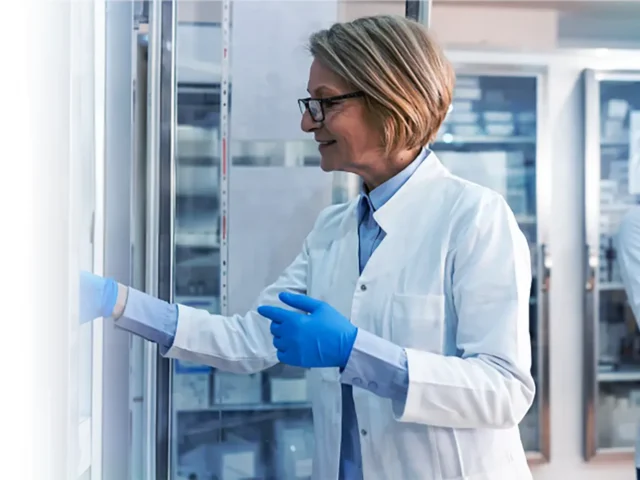
CyTOF technology has been adopted for use in hundreds of clinical trials worldwide for immune monitoring and biomarker discovery studies across broad areas including immuno-oncology, infectious disease, autoimmune disease and neuroscience.
High-parameter profiling enables the discovery and validation of new molecular targets and functions, ensuring even rare or low-expressing proteins are accounted for. This offers great value when investigating the varying impact of a drug on a biological system, capturing changes in cell behavior, differing responses across cell subtypes and slight variations in biomarker expression in a single analysis.
Wider coverage and higher resolution with CyTOF platforms are essential to identify more diverse functional subsets and understand true function in immune health.
CyTOF technology is the only single-cell platform that can simultaneously and deeply profile a broad range of surface and functional markers on the same cell, capturing functional biology and identifying predictive biomarkers.
Bridging basic research with clinical applications and health impact
Unique high-content proteomics reveals predictive response, biomarker translation and mechanism of action
Advance your clinical trials with end-to-end solutions using proprietary high-content clinical research platforms
Our services teams help take projects from inception to data analysis, providing standardized profiling and analysis.
Standard BioTools™ services are founded on a comprehensive quality management system (QMS) that complies with relevant regulatory and quality standards including ISO 13485:2016, Good Clinical Practices (GCP), Good Laboratory Practices (GLP), ISO 15189 and ISO 9001.

How to quickly start a high-parameter clinical study
Speed to data: CyTOF technology enables rapid start of a high-parameter clinical study in days to weeks with quick addition of new markers to a standard panel.
Site-to-site reproducibility: CyTOF reagents are extremely stable, allowing samples to be stored, frozen or shipped, alleviating time-sensitive restrictions when processing samples.
Read how CyTOF technology combines with whole blood preservation agents to enable analysis after storing at room temperature for up to 72 hours
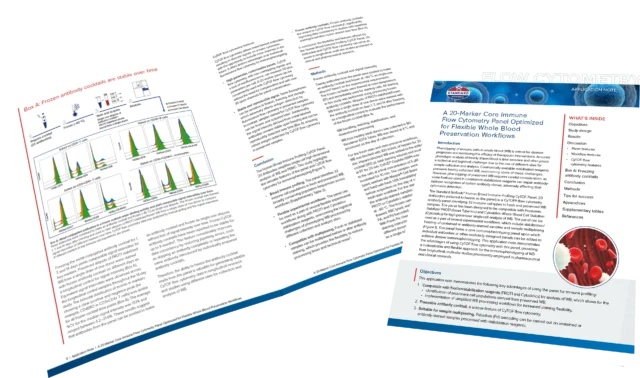
CyTOF technology facilitates standardized and large-scale immunophenotyping initiatives
Many clinical trials use the Maxpar™ Direct Immune Profiling Assay as a validated and reliable solution for deep immune profiling of human peripheral whole blood and PBMC, directly added to a single tube for antibody staining and cell processing. The assay includes a dry-format 30-marker antibody panel and enables automated identification and enumeration of 37 immune cell populations.
To profile expression markers or identify new immune cell types, the assay panel can be easily combined with additional antibodies or expansion panels.
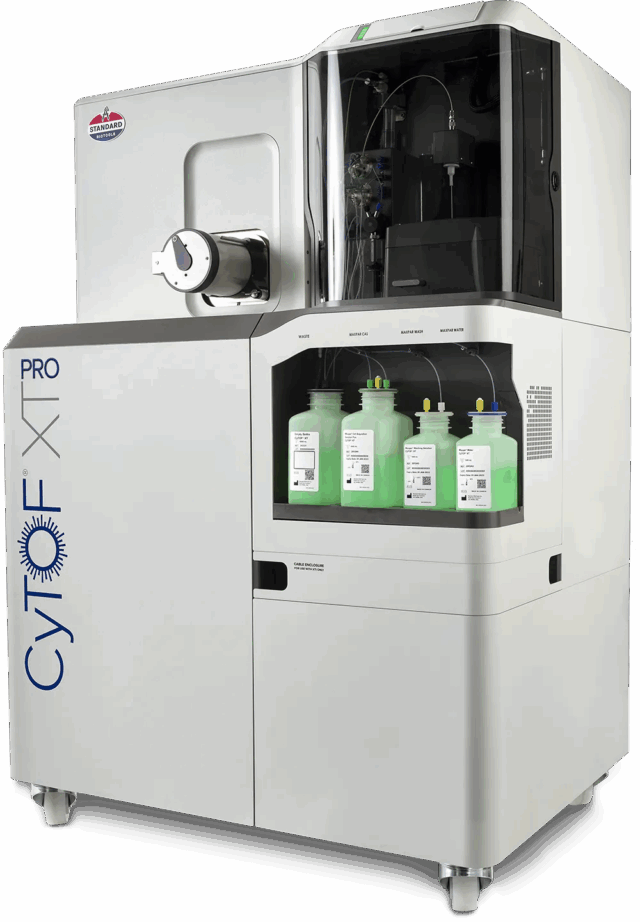
Capture the immune markers that matter – identify novel disease drivers and design better therapies
Meet CyTOF XT PRO. The CyTOF XT PRO system takes mass cytometry to the next level. With enhanced throughput mode, integrated compliance-enabling software, increased sample multiplexing and improved walk-away capabilities, the CyTOF XT PRO system meets the throughput and regulatory needs of clinical and translational research.
Uncover diverse and rare immune cell subsets and their function with the CyTOF XT PRO system – capturing critical biomarkers for improved immunotherapies.
XTra speed
Reveal differentiating markers of immune health
XTra reproducibility
Stable signals and reproducible results for any study design
XTra compliance
Up to 4x enhanced throughput to expedite insights
XTra scale
21 CFR Part 11 available to meet clinical research requirements
Why CyTOF technology?
Understanding immune response depends on learning about functional pathways
Both cell type and function are key in understanding the variation in response across different health states and in determining mechanisms behind immune potency and persistence, immune-related adverse events and immunosuppression. To obtain a complete picture, high-content solutions that assess intracellular activity are needed to capture a wide range of cell types and their functions.
Key publications showcasing CyTOF technology