Risk reduction through biological understanding
Developing new therapeutics requires a deep understanding of complex biology. From identifying promising targets to understanding mechanism of action, treatment response and resistance, quantitative single cell and spatial profiling can reveal how therapies interact with different cell types, localized tissue environments and the immune system.
Explore therapeutic modalities ↓
More complex therapeutic modalities create more complex biological questions
Different therapeutic modalities act through distinct mechanisms, but their development often depends on answering similar biological questions: Which cells respond? How is the tissue microenvironment affected? What distinguishes response from resistance? Which biomarkers can help predict therapeutic outcomes?

ADC and multispecific therapeutics
Precisely target disease-associated cells and pathways with antibody-based and multispecific approaches. Evaluate cellular phenotypes, target expression and functional states to investigate therapeutic activity and identify biomarkers associated with response.
Includes antibody-drug conjugates (ADCs), bispecifics, multispecifics
Explore more >
Cell-based therapies
Deeply characterize engineered and endogenous immune cells to understand therapeutic phenotype, function, persistence and interactions within the disease microenvironment. Confirm mechanism of action, manufactured cell behavior and therapeutic composition.
Includes CAR T-cell therapy, TCR therapy, adoptive cell therapy, engineered cell therapy
Explore more >

Immune checkpoint therapies
Investigate the complex immune interactions underlying response resulting from immune checkpoint inhibitors. Profile immune cell populations, activation states and spatial relationships to explore the biology associated with helping immune cells recognize and attack cancer.
Examples include PD-1/PD-L1, CTLA-4
Explore more >

Small molecules
Reveal the cellular and molecular effects of small-molecule therapeutics with high-dimensional profiling. Characterize pharmacodynamic responses, pathway modulation and cellular heterogeneity to better understand therapeutic activity and resistance.
Includes targeted small molecules, pharmacodynamic and pharmacokinetic biomarkers
Explore more >

Combination therapies
Investigate how multiple therapeutic mechanisms interact across cells and tissues. Explore biological responses to combination strategies that span modalities and investigate biomarkers associated with outcome.
Explore more >
Challenges in therapeutic development
Promising therapeutics can fail when biological complexity isn’t fully understood. Deeper biological profiling throughout development can help identify potential risks earlier, uncover biomarkers of response and resistance, and build greater confidence in therapeutic candidates.
Biological heterogeneity
Disease isn’t driven by one uniform cell population. Move beyond averages to uncover distinct cell populations, functional states and spatially organized tissue features that may influence therapeutic response.
Variable therapeutic response
A promising biological target does not mean every patient will respond similarly. Identify cellular, functional and spatial biomarkers associated with response to better understand why biology differs across samples and patient populations.
Emergent resistance
Drug resistance might not be a single-pathway problem. Reveal shifts in cellular phenotype, immune state, signaling and tissue organization that can accompany treatment response or resistance.
Complex mechanisms of action
Knowing that a therapeutic candidate produces an effect is different from understanding how the biology changes in response. Expand on endpoint measurements to characterize how therapies reshape functional states and microenvironments.
Risk management
High-dimensional biological analysis can provide additional evidence to inform decisions about which candidates, targets, biomarkers and combinations warrant further investment. Generate granular data to help manage biological risk.
Safety/toxicity
Characterize unintended cellular responses and systemic immune changes that may inform investigation of treatment-associated effects.
See therapeutic response from cell to tissue
CyTOF single-cell proteomics
Deep dive into response at the cellular level
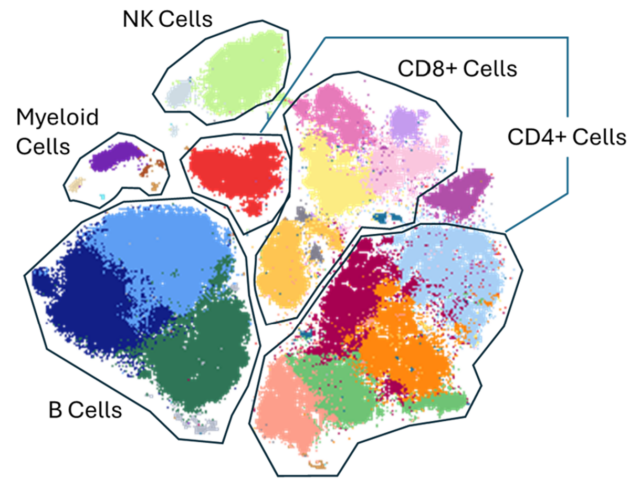
Therapeutic response rarely depends on a single cell type, biomarker or pathway. High-dimensional CyTOF analysis provides a more granular view of cellular phenotype and function, helping characterize heterogeneous responses and uncover biological signals that may be hidden in bulk measurements.
Learn about available cytometry panels
Hyperion spatial proteomics
Reveal where therapeutic responses occur
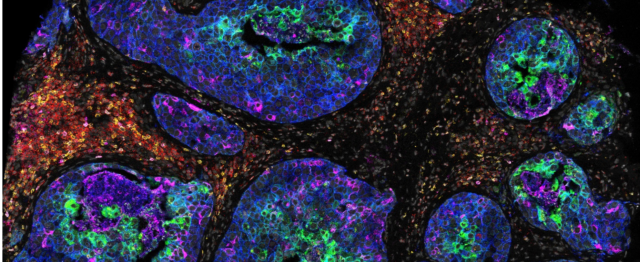
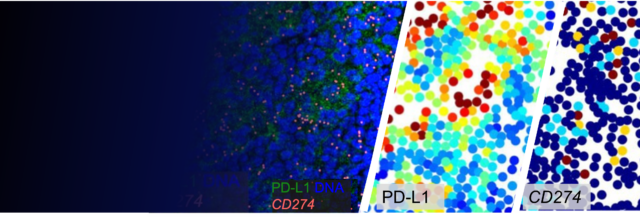
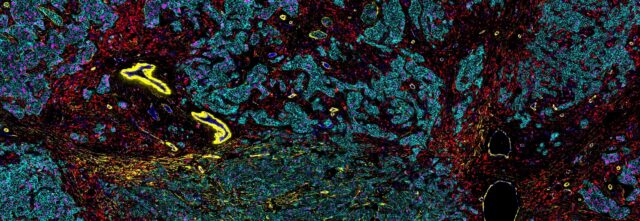
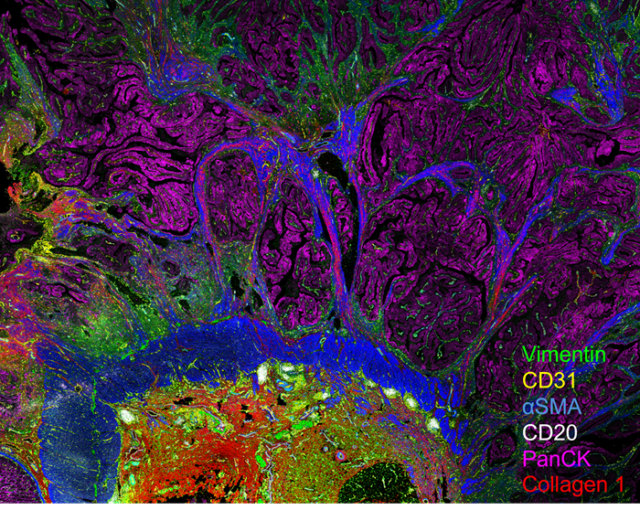
Therapeutic response is shaped by which cells are present, where they are located and how they interact within the tissue microenvironment. Spatial analysis with IMC can add tissue context to cell phenotypes, revealing relationships among therapeutic targets, immune cells, tumor cells and surrounding tissue.
Understand what cells are doing. Deeply profile immune and other cell populations to characterize:
- cell identity
- phenotype
- functional state
- signaling
- activation
- exhaustion
- treatment-associated changes
Understand where it’s happening. Preserve tissue architecture while investigating:
- cell identity
- target expression
- immune infiltration
- cell-cell interactions
- cellular neighborhoods
- spatial heterogeneity
- tumor-stroma-immune relationships
Connecting Single-Cell and Spatial Insights
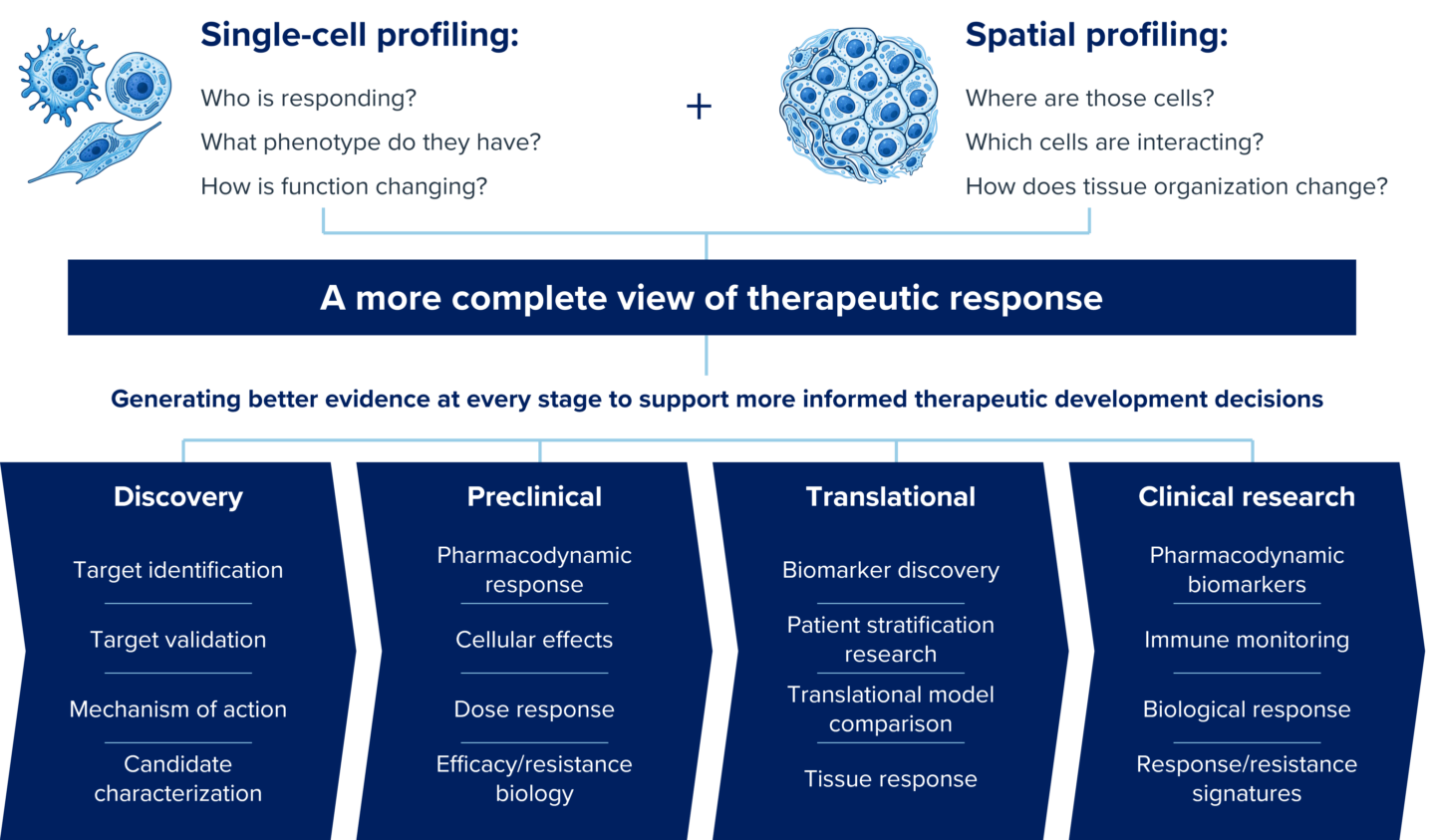
Build a more complete picture of therapeutic biology by combining deep single-cell characterization with spatially resolved tissue analysis. Investigate cellular phenotype and function at scale, then place those findings into the context of the tissue microenvironment.
Why Standard BioTools?
For the fastest path to an optimized custom assay – generating the reliable, reproducible data required for translational programs
 Reproducible high-dimensional profiling
Standardize assays across studies and sites
 Ultra-high-plex data without spectral unmixing
Measure more biology with results you can trust
 Quantitative protein measurements
Consistent, interpretable signals, not relative intensity
 One platform built for the translational journey
Fit for multi-site trials and biomarker programs

Looking for program support?
Tell us about your needs, and our specialists will help identify the right approach for you.
Talk to an expert